Cipher Decoders, Code Translators & Cryptogram Tools
Featured Tools
Morse Code Translator
Convert between English text and Morse code with audio playback and visualization.

Pig Latin Translator
Translate between English and Pig Latin — the classic word game dating back to 1869.
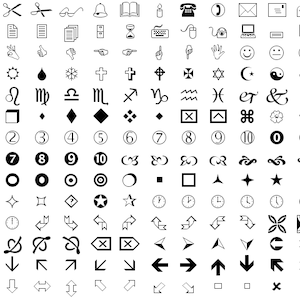
Wingdings Translator
Translate between regular text and the Wingdings symbol font
Cryptogram Solver
Decode cryptogram puzzles with manual letter mapping and frequency analysis.
Classic Ciphers
Caesar Cipher Decoder
Decode the simplest shift cipher, named after Julius Caesar. Try all 25 possible shifts at once.
Vigenère Cipher Decoder
Decode the polyalphabetic cipher that resisted breaking for three centuries.
Atbash Cipher Decoder
Decode the Hebrew reversal cipher documented in the Book of Jeremiah, around 600 BC.
Pigpen Cipher Decoder
Decode the geometric substitution cipher used by Freemasons and Confederate soldiers.
Affine Cipher
Encode, decode, and auto-solve the (ax + b) mod 26 cipher — the mathematical generalization of Caesar.
Pop Culture & Visual Alphabets
Bill Cipher's Decoder
Decode the symbol-substitution alphabet from Disney's Gravity Falls TV series.
Wingdings Translator
Translate between regular text and the Wingdings symbol font designed for Microsoft in 1990.
Klingon Translator
Translate between English and the constructed Klingon language from Star Trek, with pIqaD script rendering.
Minecraft Enchanting Table Translator
Translate the Standard Galactic Alphabet — the symbol set from Commander Keen (1991), famously used in Minecraft's enchanting table.
Aurebesh Translator
Translate between English and the Star Wars alphabet that appears across the films, shows, comics, and games.
Cryptograms & Puzzles
Signal Codes & Translators
Morse Code Translator
Convert between English and Morse code with audio playback and light-signal visualization.
Morse Code Alphabet
Full Morse alphabet with letter-by-letter audio, mnemonics, and a printable reference chart.
Binary Code Translator
Convert between English text and binary — useful for STEM classes and ASCII reference.
Pig Latin Translator
Translate between English and Pig Latin — the children's word game documented since 1869.
Cipher Decoders, Code Translators & Cryptogram Tools
Free online tools for decoding ciphers, translating between codes, and solving cryptograms. Every tool below is free, no signup, and runs in your browser.
What's a cipher?
A cipher is a method of disguising a message by replacing or rearranging its letters according to a system. The simplest ciphers (Caesar, Atbash) substitute one letter for another following a fixed rule. More complex ones (Vigenère, Affine) use a keyword or mathematical function. Visual ciphers (Pigpen, Wingdings, Bill Cipher) replace letters with symbols or images. Signal codes (Morse, Binary, Tap Code) encode letters as sequences of dots, dashes, bits, or taps. The tools on this page handle all of these.
We have eighteen tools covering classical cryptography (Caesar, Vigenère, Pigpen, Atbash, Polybius, Affine), pop-culture and visual alphabets (Bill Cipher, Wingdings, Klingon, Standard Galactic, Aurebesh), cryptogram puzzles (a solver and a maker), and signal codes (Morse, Binary, Tap Code, Pig Latin).
Classic Ciphers
The classical substitution ciphers are the foundation of cryptography. Generally they were invented for military, diplomatic, and personal communication long before computers.
The Caesar Cipher Decoder handles the simplest shift cipher, named after Julius Caesar, who used it for sensitive military correspondence, as the Roman historian Suetonius records in De Vita Caesarum §56. The Vigenère Cipher Decoder handles the polyalphabetic cipher commonly attributed to Blaise de Vigenère — though the cipher was actually first described by Giovan Battista Bellaso in 1553. It resisted breaking for three centuries; Charles Babbage solved it privately around 1854, and Friedrich Kasiski published the breakthrough method in 1863.
The Pigpen Cipher Decoder handles the geometric substitution cipher (also known as the Masonic, Freemason's, Rosicrucian, or Tic-Tac-Toe cipher) used by Freemasons since the 17th century and by Confederate soldiers during the American Civil War. The Atbash Cipher Decoder handles the Hebrew reversal cipher documented in the Book of Jeremiah around 600 BC. The word Sheshach (Jeremiah 25:26) is the Atbash encoding of Babel, making Atbash potentially the oldest cipher in continuously preserved text.
Pop Culture & Visual Alphabets
Bill Cipher's Decoder handles the symbol-substitution alphabet from Disney's Gravity Falls TV series: a 26-letter cipher (also written as "Bill Cypher") used in the show's puzzle and riddle content. Wingdings Cipher Solver translates between regular text and the Wingdings symbol font designed by Charles Bigelow and Kris Holmes for Microsoft in 1990 — useful for typography references, classroom puzzles, party invitations, and the famous "Q33NY" 9/11 conspiracy debunk.
The Klingon Translator handles the constructed language from Star Trek — nuqneH? Qapla'! Translate English to Klingon vocabulary and back, with an output toggle for pIqaD (the native Klingon writing system). The Standard Galactic Alphabet Translator translates between English and the symbol set originally created for Commander Keen (1991) and famously used in Minecraft's enchanting table. The Aurebesh Translator handles the Star Wars alphabet that appears across the films, shows, comics, and games.
Cryptograms & Puzzles
A Cryptogram Solver helps you decode a cryptogram puzzle — a message where each letter has been replaced with a different letter by a fixed 1:1 substitution. Cryptograms appear in newspapers (the LA Times Cryptoquote, the King Features Cryptoquip), puzzle books, escape rooms, and recreational mathematics. The solver lets you map letters manually as you spot patterns (E is the most common letter in English text; one-letter words are usually A or I; THE is the most common three-letter word), or try an auto-solve based on frequency analysis and dictionary matching. The Cryptogram Maker is the counterpart — paste any quote or phrase and it generates a cryptogram puzzle for you to share with friends, set as a classroom exercise, or use as an escape-room clue.
Signal Codes & Translators
Morse Code Translator converts between English text and Morse code with audio playback and light-signal visualization — type a message and hear it transmitted as dits and dahs, or watch it flash. For the complete Morse alphabet with letter-by-letter audio, mnemonics, and printable reference, see the Morse Code Alphabet reference page.
The Pig Latin Translator converts between English and Pig Latin — the children's word game documented as early as 1869 in Putnam's Monthly Magazine, where consonant-starting words become "Igpay Atinlay" (move the initial consonant to the end + "ay"; vowel-starting words get "way" or "ay" appended).
The Binary Code Translator converts between English text and binary (the 0s and 1s of computer encoding) — useful for understanding ASCII, for STEM classes, and for the everyday curiosity of "what does my name look like in binary?"
More Free Tools
For reference word lists and Scrabble strategy, see Scrabble Word Lists. For free puzzle makers and worksheet generators, see Teacher Tools. For wedding hashtags, fortune cookies, and themed party tools, see Party & Event Generators. For online word games, see the Games Hub.
Frequently Asked Questions
A cipher is a method of disguising a message by replacing or rearranging its letters according to a fixed rule. Simple substitution ciphers (like Caesar or Atbash) swap each letter for another following a single rule. Polyalphabetic ciphers (like the Vigenère cipher) use a keyword to shift letters by different amounts. Visual ciphers (Pigpen, Wingdings, Bill Cipher) replace letters with symbols or shapes. The tools on this page decode all of the above.
A cipher replaces individual letters (or pairs of letters) following a fixed rule. A code replaces whole words or phrases — for example, "the eagle has landed" might be a code phrase meaning "the mission is complete." Strictly, Morse code is a cipher (it maps individual characters to dot-dash sequences), but the name "code" stuck. Most popular references on cryptology use the two terms interchangeably.
A Caesar cipher shifts each letter by a fixed number of positions in the alphabet. To decode it, you shift back by the same number. If the cipher shifted by 3 (A → D, B → E, C → F…), shifting each letter back by 3 reverses it. The Caesar Cipher Decoder on this page lets you try all 25 possible shifts at once and shows the most likely English-language result.
The Caesar cipher (1st century BCE) is the most famous classical cipher — and the simplest. The Vigenère cipher (named for Blaise de Vigenère but actually first described by Giovan Battista Bellaso in 1553) was the most famous unbreakable cipher of its era — "le chiffre indéchiffrable" — until Charles Babbage solved it privately around 1854 and Friedrich Kasiski published the breakthrough method in 1863. The Enigma machine (used by Nazi Germany in WWII) is the most famous mechanical cipher. The cracking of Enigma at Bletchley Park is one of the foundational stories of modern computing.
A cryptogram is a puzzle where each letter of a message has been replaced with a different letter following a fixed 1:1 substitution. The Cryptogram Solver lets you fill in your best guesses for what each letter represents — as you fill them in, the decoded message updates live. Start with common patterns: single-letter words are usually A or I, the most common three-letter word in English is THE, and the most common letter is E. The auto-solve mode runs frequency analysis and dictionary matching to propose candidate decodes for you to refine.
The Cryptogram Solver decodes a cryptogram puzzle — someone gives you encoded text and you want to recover the original message. The Cryptogram Maker is the inverse: you give it a plain phrase or quote, and it generates a cryptogram puzzle for you to share with friends, set up as a classroom exercise, or use as an escape-room clue.
The Pigpen cipher (also called the Masonic Cipher, Freemason's Cipher, Rosicrucian Cipher, or Tic-Tac-Toe Cipher) replaces each letter of the alphabet with a geometric symbol based on its position in a grid. The earliest documented cipher of this geometric-grid style appears in Heinrich Cornelius Agrippa's De Occulta Philosophia (1531); the cipher was later adopted by Freemasons (carved on gravestones from the 18th–19th centuries) and used by Confederate soldiers during the American Civil War. The Pigpen Cipher Decoder on this page converts between Pigpen symbols and plain text.
Technically yes — Morse code maps each letter, number, and punctuation mark to a unique sequence of dots and dashes following a fixed rule, which makes it a cipher by the strict definition. In casual usage, it's called a "code" because it was designed for transmission (over telegraph wires, then radio) rather than for secrecy. Anyone with the Morse alphabet can decode it instantly. See the Morse Code Translator for converting between text and Morse, and the Morse Code Alphabet for the full reference.
All three are signal codes that encode letters as sequences. Morse code (Samuel Morse and Alfred Vail, 1830s) uses dots and dashes — the oldest of the three and the most famous, used in telegraphy, radio, and emergency signalling. Binary code is the foundation of modern computing — every letter and symbol on a computer is ultimately stored as a sequence of 0s and 1s. Tap code (5×5 grid; each letter is two tap counts) was famously used by Vietnam War POWs to communicate by tapping on prison walls and is structurally identical to the ancient Polybius Square. Tools on this page handle all three.
Fictional alphabets are constructed letter-substitution systems created for fictional worlds: Klingon for Star Trek; Aurebesh for Star Wars; the Standard Galactic Alphabet for Commander Keen (1991), later famously reused in Minecraft's enchanting table. Most are simple 26-letter substitution ciphers — each fictional symbol represents one English letter. The translators on this page convert between English and the fictional alphabet of your choice, useful for fan projects, escape-room design, themed party invitations, and (for Klingon especially) language-learning curiosity.