
Why Crosswords Captivate Us
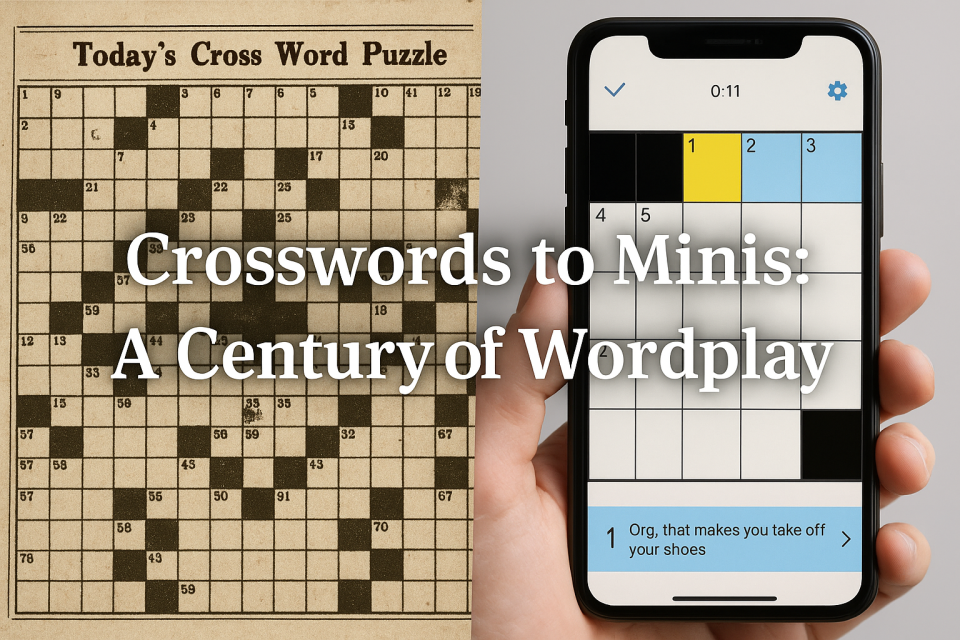
Crosswords have a way of pulling us in. With just a few black-and-white squares and clever clues, they’ve entertained, challenged, and even frustrated solvers for over a century. The very first crossword appeared in 1913, invented by a British journalist named Arthur Wynne, and it set off a cultural phenomenon. Today, the puzzle has evolved into countless variations — but none has taken off quite like the mini crossword.
Whether you’re a die-hard fan of the sprawling Sunday grids or someone who sneaks in a crossword mini while waiting for your morning coffee, the appeal is universal: a quick mental workout that feels just as satisfying as finishing a book chapter or solving a riddle.
The Birth of the Crossword Puzzle (1910s–1930s)
The origin of the crossword is as quirky as the puzzles themselves. On December 21, 1913, Arthur Wynne published a puzzle in the New York World newspaper. He originally called it a “Word-Cross,” and it was shaped like a diamond rather than today’s familiar square. A simple printing error soon flipped the name to “Cross-Word” — and history was made.
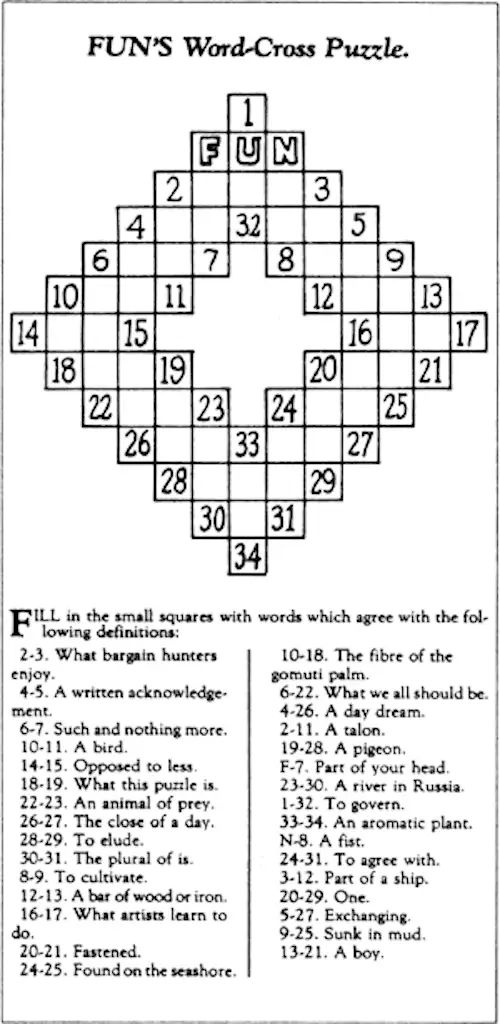
The original 1913 “Word-Cross” puzzle by Arthur Wynne — the blueprint that eventually inspired iconic formats like the modern NYT crossword.
By the 1920s, crosswords were exploding in popularity. Newspapers across America and Europe competed to feature them, knowing readers would buy a paper just for the daily puzzle. Book publishers jumped on the trend, too: in 1924, Simon & Schuster released the first crossword puzzle book. Fun fact? They included a pencil with every copy, figuring no one could resist trying right away.
Crosswords in Pop Culture
It didn’t take long for crosswords to seep into everyday culture. During World War II, military intelligence units encouraged recruits to practice solving crosswords to sharpen their problem-solving and code-breaking skills. Some of the cryptographers who cracked the famous German Enigma code were avid crossword fans.
Crosswords also picked up a reputation in the 1970s as both intellectual and accessible — something you could do on the subway or at a café, but also something that tested your wits against the smartest minds out there.
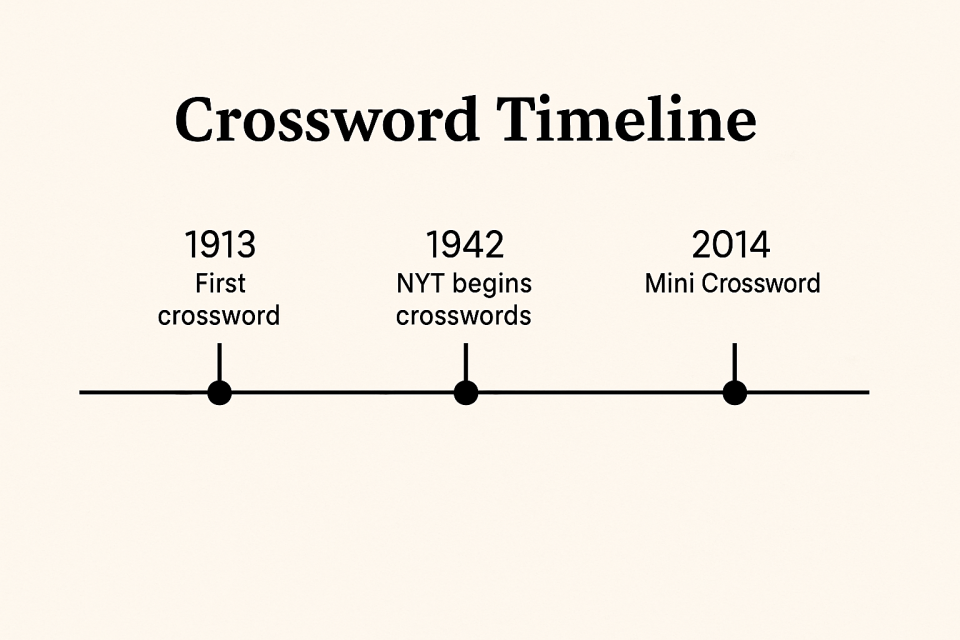
One surprising fact: The New York Times, now considered the gold standard for crosswords, initially resisted them. The paper dismissed crosswords as a silly fad until 1942, when the grim backdrop of World War II led editors to finally publish one. They decided readers needed a daily dose of distraction.
The Evolution of the Crossword: From Newspapers to Apps
Fast-forward a few decades, and the crossword went digital. As print media declined, crosswords found a second life in apps, websites, and e-readers. Suddenly, you didn’t need a paper and pencil — you could tap in answers on your phone during a commute, or even get instant feedback if a square was wrong.
The format itself also began to shift. While many still loved the challenge of a 21×21 Sunday grid, plenty of new players wanted something shorter, simpler, and more mobile-friendly. Enter: the crossword mini.
The Rise of the Mini Crossword (2010s–Today)
So, what exactly is a mini crossword? Think of it as a bite-sized version of the classic. Instead of sprawling grids with dozens of clues, a mini might be 5×5 or 7×7 — quick enough to finish in a few minutes, yet still challenging enough to feel rewarding.
The mini crossword rose to prominence in the mid-2010s, with The New York Times officially launching its Mini in 2014. Designed to be solvable in under two minutes, it quickly became a morning ritual for millions. Other publishers and word-game platforms followed suit, creating their own mini versions.
Why did the crossword mini take off? Because modern life craves short bursts of challenge. Minis are perfect for:
- Coffee breaks
- Commuter rides
- Brain warm-ups before work or school
They’re fast, they’re fun, and they’re endlessly shareable.
Why We Love the Mini Crossword
The psychology of the mini crossword is fascinating. Unlike its full-sized sibling, which can sometimes feel intimidating, the mini offers quick wins. That’s part of the appeal:
- Instant gratification: Solving even a single crossword clue feels good — finishing a mini feels like a daily accomplishment.
- Accessibility: Minis are beginner-friendly. New solvers who might feel overwhelmed by a large puzzle can jump right in.
- Gamification: Many mini apps include streaks, timers, and leaderboards, adding extra motivation.
- Speed-solving: Expert puzzlers take minis as a challenge, with some able to finish in under 30 seconds.
Fun fact: The very first New York Times Mini Crossword had just five clues across and five down — a micro puzzle that millions still look back on fondly.
Fun Facts About Crosswords and Minis
Want some snackable trivia to impress your fellow puzzle fans? Here are some gems:
- The longest crossword ever made had over 91,000 clues. It stretched across a whole book.
- President Bill Clinton is a known crossword enthusiast — he even contributed clues to a New York Times puzzle.
- The first mini crossword published in the New York Times (2014) had only 10 total clues.
- Crosswords have been used in romantic proposals — with custom grids popping the big question.
- In the UK, some crossword setters (puzzle creators) are so famous they’re treated like literary celebrities.
How The Word Finder Helps You Solve Crosswords and Minis Faster
Whether you love classic grids or the fast-paced thrill of a mini crossword, sometimes a clue just won’t click — and that’s where tools like The Word Finder’s Crossword Solver become indispensable. Our solver can help you crack tough clues, fill in partial answers, and uncover those obscure words that even longtime puzzlers sometimes blank on. It works for traditional crossword puzzles, mini crosswords, and even themed or cryptic grids. Simply enter the letters you know and watch the possibilities unfold. If you’re looking to sharpen your skills, keep your streak alive, or finally solve that one clue that’s been driving you mad, explore our full tool here: Consider it your secret weapon for becoming a faster, smarter, and more confident crossword solver.
Conclusion: From 1913 to Today
From Arthur Wynne’s diamond-shaped puzzle in 1913 to today’s lightning-fast minis, the crossword has never stopped evolving. It’s a rare example of a pastime that feels both old-fashioned and endlessly modern.
Whether you tackle a giant Sunday crossword or sneak in a mini crossword during your commute, one thing is clear: these puzzles aren’t going anywhere. They’ve survived a century, adapted to new technology, and become part of our daily lives.
